Travel eSIM plans for 200+ destinations: compare MeSIM data packages, check 30-day prices against Airalo, Saily and Holafly, and buy instantly.
Submit your website to get discovered by thousands of potential customers and boost your SEO.
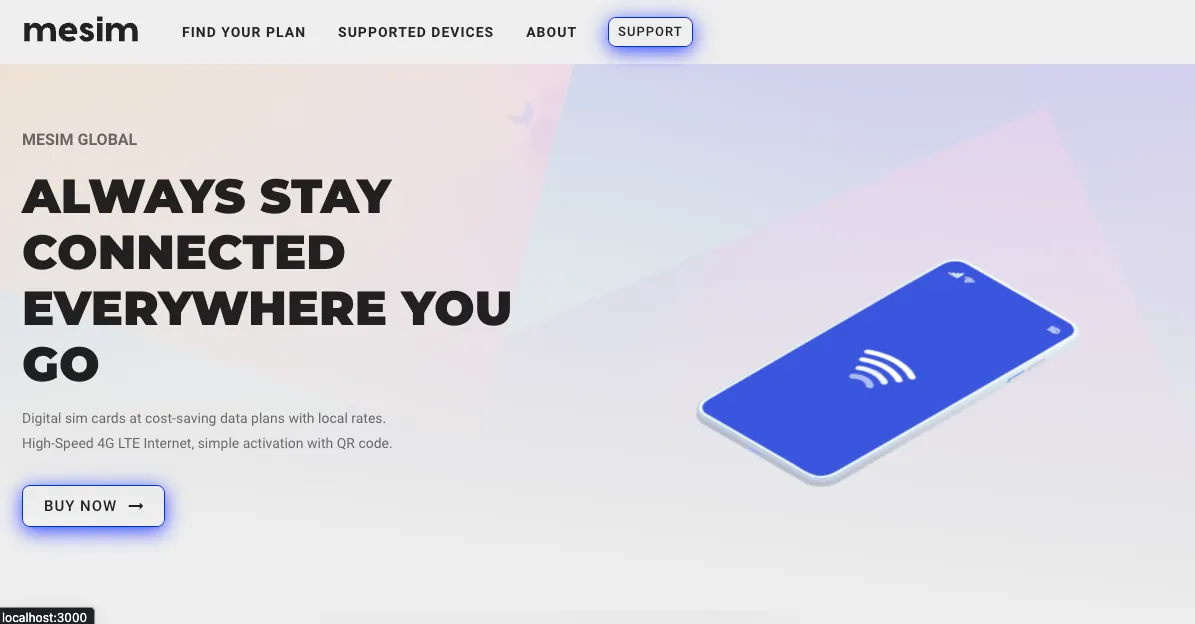
Get ListedMeSIM is a travel eSIM storefront that sells prepaid data plans covering more than 200 destinations, with plan types spanning single country packages, regional bundles, global packages, unlimited options and eSIMs that include a phone number. The service targets leisure and business travelers who want connectivity arranged before a flight instead of paying roaming charges or queueing for a local physical SIM after landing. Shopping happens on the web, delivery is digital, and the catalogue publishes data allowances, validity windows and per destination pricing so buyers can evaluate options side by side. MeSIM positions itself on price, publishing selected head to head comparisons against larger eSIM brands and linking the competitor source pages used for each figure.
Catalogue spanning more than 200 destinations. The storefront is organised around a destination directory at /countries/, where travelers browse by country and open individual plan pages such as the Australia 10GB 30 day package, the Japan 10GB 30 day package and the United States 10GB 30 day package. Each plan listing carries the allowance, the validity window and the price in US dollars, which makes side by side evaluation possible without opening a separate calculator.
Published price comparisons against Airalo, Saily and Holafly. The homepage embeds a comparison table that places matched 10GB 30 day offers from MeSIM, Airalo and Saily next to Holafly unlimited plans, with a note stating the saving versus the lower competitor price. Every row links out to the competitor product page used as the source, and the section carries a timestamp for both the MeSIM catalogue and the competitor price check. The page also discloses that the comparison covers selected examples only and that MeSIM may not be cheaper on every offer.
Five distinct plan shapes under one roof. Buyers can move between single country plans, regional eSIMs for multi country itineraries, global eSIMs for broader coverage, unlimited travel eSIMs and phone number eSIMs that carry a real number for calls and verification codes. Each category has its own landing page reachable from the primary navigation, so a traveler planning a multi stop trip does not have to guess which product type fits.
Instant digital delivery with pre-departure installation. Orders are fulfilled digitally, with eSIM details delivered after a secure online purchase and installed on a compatible unlocked handset before travel. The published workflow separates installation from activation, so the travel eSIM stays dormant until it is switched on at the destination and connected to a supported mobile network.
Supported device lookup. A dedicated /supported-devices/ page lets buyers confirm handset compatibility before paying, which matters because eSIM support varies by model, region and carrier lock status. This is the main technical gate in the purchase flow and it is linked directly from the top navigation.
Editorial comparison and pricing hub. Beyond the catalogue, MeSIM publishes provider comparisons such as Airalo alternatives, Holafly alternatives and a Roamless versus Airalo versus Holafly versus MeSIM breakdown, plus a travel data pricing study that asks what 10GB costs around the world. These pages sit alongside installation and data usage guides, giving the site a research layer that supports the transactional catalogue.
Consistent transparency notes on every claim. Comparison blocks carry caveats about fair use policies, hotspot limits, network routing, activation terms and price volatility, and they explicitly distinguish fixed allowance products from unlimited ones. The approach is unusual for a budget eSIM reseller and makes the marketing claims easier to audit.
The journey starts at the destination directory or at one of the product category pages for unlimited, regional, global or phone number eSIMs. Travelers narrow the catalogue by country, then compare data allowance, validity period, price and network details on the plan page. Before checkout, the supported device page confirms that the handset is eSIM capable and carrier unlocked, which is the single most common reason a purchase fails to activate.
After a secure online purchase, eSIM details arrive digitally. Installation happens on the device before departure, usually by scanning a QR code or entering activation details manually, and the profile stays inactive until the traveler enables it on arrival. At the destination the travel line is switched on and connects to a supported local network while the primary SIM remains in place for calls and messages.
Setup requirements are modest: an unlocked eSIM compatible phone, a stable connection for the initial install, and a decision about which line handles data. The interface itself is a standard web storefront with no installation required, and the plan pages front load the two numbers buyers care about, price and allowance.
A solo consultant flying to Tokyo for a two week client engagement who needs predictable data without a roaming addendum. The Japan 10GB 30 day plan covers the trip on a single purchase, and installation at home avoids airport SIM counters.
A couple planning a multi country European itinerary who would otherwise buy three separate local SIMs. A regional eSIM consolidates coverage across borders, while the global eSIM category serves longer round the world routes.
A small business operations lead equipping a team for a trade show who wants identical connectivity for several staff members. Buying the same destination plan for each handset keeps costs predictable and removes the need to collect receipts from airport vendors.
A remote worker who needs a reachable number for bank and platform verification while travelling. The phone number eSIM category addresses that specific gap, which data only travel plans cannot fill.
A price sensitive student on a working holiday in Australia who compares the 10GB 30 day offers across MeSIM, Airalo and Saily before committing, using the published table and the linked source pages as a starting point.
MeSIM suits individual travelers, freelancers and small teams who want prepaid data arranged before departure and who are comfortable buying online without a retail store. The technical bar is low: an unlocked eSIM capable handset and a few minutes for installation. Alternatives include Airalo, Saily and Holafly, which offer broader brand recognition and mature apps. MeSIM competes mainly on published pricing and on the transparency of its comparison tables, which makes it a reasonable first stop for buyers who research before they purchase.