WakeSharp is an alarm clock app for heavy sleepers that requires math, photo, walking or voice missions before an alarm can be silenced.
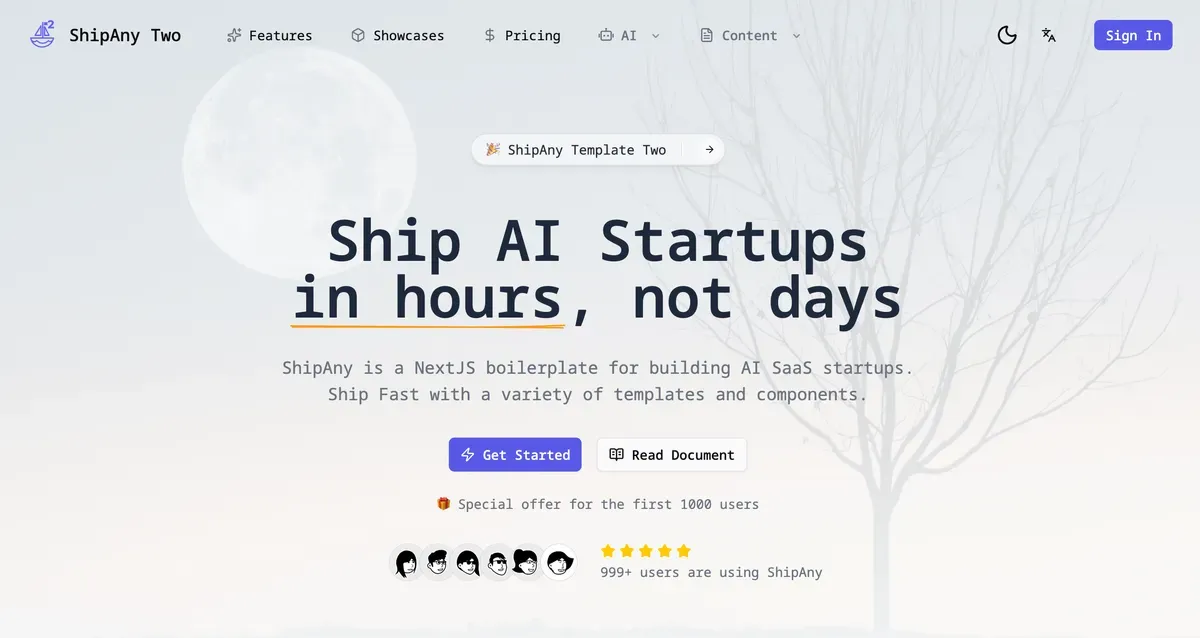

Free online QR code generator. Create custom QR codes with AI beautification, dynamic QR codes with scan analytics, batch generation, and a REST API for developers.
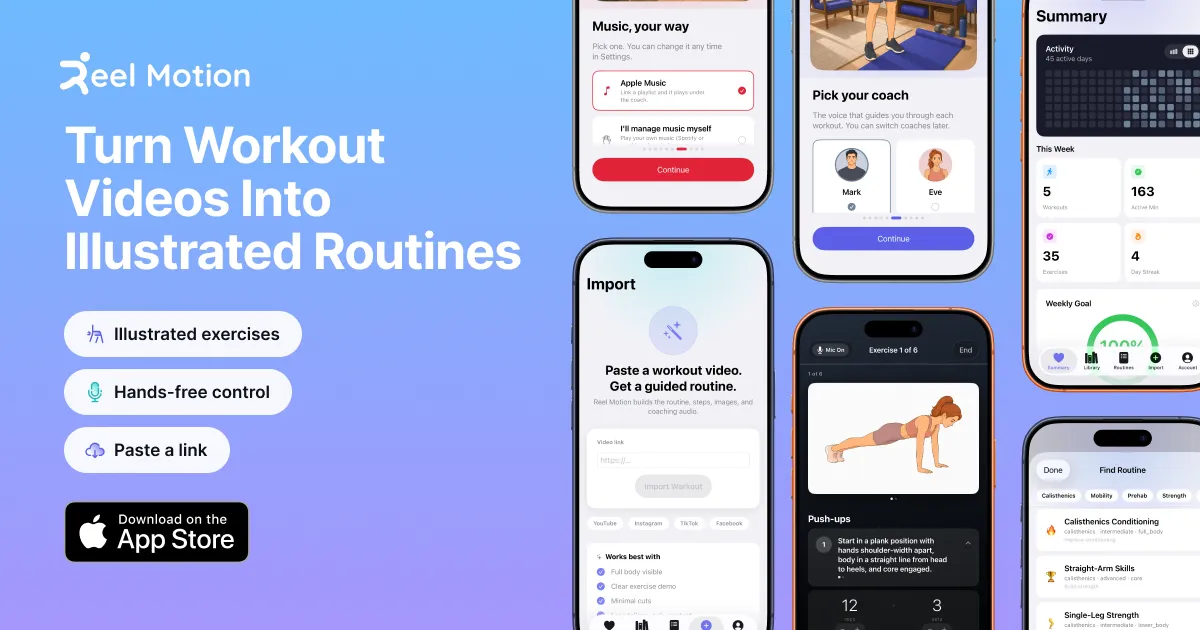
Reel Motion turns YouTube, Instagram, and TikTok workout videos into illustrated, step-by-step iOS routines with hands-free coach audio.
Submit your website to get discovered by thousands of potential customers and boost your SEO.
Get ListedWakeSharp is an alarm clock app for heavy sleepers, distributed on the App Store and Google Play by KineticBit Inc. The problem it targets is the snooze button: a swipe or a tap demands almost no cognitive engagement, so a person who is barely conscious can silence an alarm and fall back asleep without ever registering the decision. WakeSharp removes that gesture and replaces it with a mission that must be completed before the morning is allowed to count. Missions span arithmetic and puzzles, a photograph of a spot chosen the night before, real steps counted by the phone, and answers spoken out loud.
The app then scores how alert the user actually was, producing a daily Sharpness Score measured against that person's own rolling baseline rather than against strangers. It is built for shift workers, students with early lectures, commuters, and anyone whose phone alarm has quietly stopped being dependable. Both applications are native builds rather than cross-platform wrappers, and no WakeSharp account is required at any point in the flow.
Mission-based alarm dismissal. Rather than offering a snooze control, WakeSharp asks the user to finish a chosen mission before the alarm is considered done. The mission library covers Mind Games (quick arithmetic rounds), Memory Match, Sequence Recall, Colour Clash, Type It Out, Photo Proof, Scan an Object, Fetch, Face Check, Fruit Slash, Walk It Off, First Light, Serial Sevens and Name Five. A single alarm can chain several missions in a user-defined order, and if one cannot run on a given morning, such as a dead camera or a phone with no step counter, the app falls back to a mission that can.
Alarm reliability verdict. A screen under Settings labelled Alarm reliability inspects the conditions that commonly stop alarms in practice, including permissions, alarm volume, notification settings, lock-screen takeover and battery restrictions. It leads with a verdict instead of a checklist, stating that the alarm will ring, may not ring, or cannot ring. Where the platform refuses to expose a setting, the app says so rather than showing a green tick, and after a failed alarm it reports the provable cause or admits it could not determine one.
Smart calendar alarms and shift rotations. A rule such as ring 90 minutes before the first meeting reads the device calendar, re-checks it overnight, and shifts the alarm when the meeting moves. Access is read-only, optional and processed on the phone with nothing transmitted. Non-weekly patterns such as two days on, two nights, four off are handled by a rotation editor with a preview calendar and the ability to skip a single date without deleting the pattern, while profiles swap an entire alarm set at once for work, vacation or on-call periods.
Sharpness Score and daily warm-up. Every morning three games rotate into a two-minute warm-up drawn from Mind Games, Memory Match, Sequence Recall, Word Dash and Reaction Tap, arranged so the full set cycles inside a week and the warm-up never repeats whatever the mission just demanded. The resulting Sharpness Score is a number out of 100 benchmarked against the user's own rolling baseline. WakeSharp states openly that this is an in-app score and not a clinical test.
Streaks, trends and freeze tokens. A streak counter, a trend chart and freeze tokens track consistency across mornings where life interferes, with milestones at 7, 30, 100 and 365 days. The full Sharpness history is retained for as long as the user keeps the app installed, and yesterday's performance is treated as the only benchmark that carries meaning at 6am.
Watch app and backup phone alarm. A companion watch app on watchOS 26 or Wear OS 3 taps the wearer awake before the room hears anything, and the phone alarm then shifts a few minutes later as the backup. Only a dismissal on the watch cancels the phone alarm, so a flat watch, one out of range, or one unopened for 36 hours leaves the phone alarm exactly where it was. A watch face complication is included.
Shared alarms and wake challenges. Wake with a friend sends a link that causes the receiving phone to build the same alarm locally, with nothing to join, nothing to sign up for and no server in the middle, and each person keeps an independent copy. Beat my wake issues an identical problem set with the same seed, rounds and difficulty so two people can compare which of them was genuinely awake.
A new user installs WakeSharp from the App Store or Google Play, opens it, and grants alarm access, which on iPhone means accepting Apple's AlarmKit permission and on Android means approving exact-alarm, notification and lock-screen permissions. From there the user builds an alarm, names what it is for (a workout, a commute, breakfast), picks an alarm tone and wallpaper, and attaches one or more missions in a preferred order. Optionally, a calendar rule can be added so the alarm moves with the first meeting, and a pre-bed reliability check folds the worst finding into the evening reminder while there is still time to act on it.
When the alarm fires, it presents over the lock screen and rings through Silent mode and Focus once alarm access has been granted. The user completes the mission sequence to silence it, then plays the rotating warm-up games, which are optional because the alarm is already off. The session ends with a Sharpness Score reveal, a streak update and a trend line. Signing in with Apple or Google is available purely for backup, is off by default, and no alarm ever waits on the network to ring.
A hospital nurse on rotating shifts who works two day shifts followed by two night shifts needs an alarm that understands a pattern that is not weekly. The rotation editor accepts the sequence, shows a preview calendar, and allows a single date to be skipped without dismantling the schedule, while the reliability verdict confirms the night before that volume and battery restrictions will not silence the ring.
A university student with 8am lectures who habitually dismisses alarms in a half-asleep state can set Mind Games plus Type It Out so that arithmetic and an autocorrect-free typed line stand between the alarm and silence. The Sharpness Score then gives a daily read on how quickly the student actually came round.
A remote worker with early standups can create a rule that rings 90 minutes before the first calendar meeting. Because the calendar is read on the device and re-checked overnight, a meeting that moves to an earlier slot moves the alarm with it, and a cancelled meeting no longer triggers a pointless early wake.
A pair of flatmates who both oversleep can use Wake with a friend: one sends a link, the other's phone constructs the same alarm locally, and each retains an independent copy so changing one does not reach into the other. Beat my wake then settles which of them solved the identical problem set faster.
A runner training before work can attach Walk It Off or First Light so that real steps or a walk to a window holding the phone in daylight are required, turning the dismissal itself into the first movement of the morning.
WakeSharp is aimed at individual consumers rather than teams: heavy sleepers, shift and rotation workers, students, early-commuting professionals and anyone for whom a standard phone alarm has proven unreliable. It suits non-technical users because setup is a guided alarm builder rather than a configuration file, though the reliability screen rewards users willing to inspect Android permission states. Common alternatives include Alarmy, Sleep Cycle and the built-in Apple Clock or Google Clock. WakeSharp differentiates through its on-device processing model, the absence of any required account, the alarm reliability verdict that admits what the platform will not disclose, and a Sharpness Score benchmarked against the user's own history rather than a wider population.