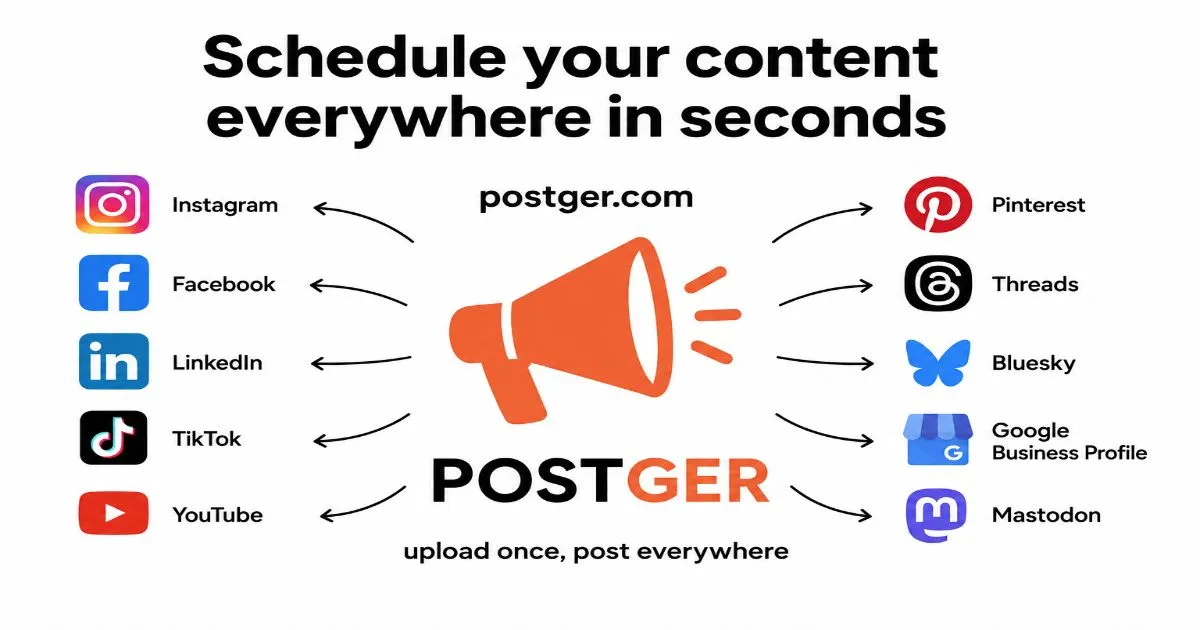
Postger is a social media management platform for teams and agencies to schedule, approve, and publish content across 10+ platforms from one dashboard.
Submit your website to get discovered by thousands of potential customers and boost your SEO.
Get ListedPostger is a social media management platform designed for teams and agencies that need to plan, schedule, approve, and publish content across multiple social networks from a single dashboard. The platform supports over 10 major platforms including Facebook, Instagram, LinkedIn, TikTok, YouTube, Pinterest, Threads, Bluesky, Mastodon, and Google Business Profile. Unlike many competitors that rely on aggregator APIs, Postger uses direct API connections to each platform, ensuring full feature support for publishing, comments, DMs, and insights where available.
The problem Postger solves is the fragmentation of social media management. Teams often juggle multiple tools for scheduling, approval workflows, client communication, and analytics. Postger consolidates these into one workspace with features like a visual content calendar, multi-platform composer, idea board, approval workflows, client portal, unified inbox, media library, analytics, AI tools, and team management. The platform is built for solo creators, growing teams, and agencies managing multiple client accounts.
Market positioning is competitive with tools like Buffer, Hootsuite, Later, and Sprout Social. Postger differentiates itself with flat pricing that includes unlimited team members on the Agency plan, no per-seat fees, and a strong focus on approval workflows and client portals. The platform offers a 7-day free trial with no credit card required and a 14-day money-back guarantee.
Visual Content Calendar – Postger provides a drag-and-drop calendar view that allows users to plan and visualize posts across all connected platforms. The calendar supports month, week, and day views, making it easy to see the entire content schedule at a glance. Users can drag posts to reschedule, create recurring slots, and manage queues for consistent posting.
Multi-Platform Publishing – The composer lets users create a post once and publish it to multiple platforms simultaneously. Each platform can have customized copy, media attachments, and previews. Supported post types include single images, carousels, multi-image posts, and videos. The composer also supports bulk CSV import for large-scale scheduling.
Idea Board – A Kanban-style board for brainstorming and organizing content ideas. Users can create cards for post ideas, move them through stages like brainstorm, draft, scheduled, and published. This feature helps teams keep track of content pipeline and convert ideas into scheduled posts seamlessly.
Approval Workflows – Postger includes a built-in approval system that routes posts through client or manager review. Clients receive a magic link to preview the post, leave inline comments, and approve or request changes without needing a Postger account. This streamlines the review process for agencies managing multiple clients.
Client Portal – A branded portal where clients can review and approve content. The portal provides a clear interface for clients to see scheduled posts, leave feedback, and track approval status. This eliminates back-and-forth emails and keeps all communication in one place.
Unified Inbox – All comments, DMs, and mentions from every connected platform are aggregated into a single feed. Users can reply directly from Postger, and the inbox includes SLA tracking for response times. This feature is particularly useful for teams that need to manage customer engagement across multiple channels.
Analytics & Reporting – Postger offers per-post and channel-level metrics with KPI cards and trend charts. Users can track engagement, reach, and growth over time. Reports can be exported as PDF or CSV for client presentations or internal analysis. The analytics dashboard provides actionable insights to optimize content strategy.
AI & Intelligence Tools – AI-powered features include content scoring, auto-generated captions, and an open API for AI agents. The AI Agent API allows external tools to draft content, suggest hashtags, and automate publishing workflows. This positions Postger as a forward-thinking platform for teams that want to leverage artificial intelligence in their social media management.
Teams & Workspaces – Custom roles and permissions allow administrators to control access levels for team members. Multi-brand workspaces let agencies manage multiple clients under one account, each isolated with its own profiles, content, and settings. The Agency plan includes unlimited users and workspaces.
Smart Queues – Recurring posting slots with auto-scheduling. Users can set up queues that automatically fill with content from the idea board or drafts, ensuring a consistent posting cadence without manual intervention.
Getting started with Postger begins with a 7-day free trial that requires no credit card. After signing up, users connect their social media accounts through direct API integrations. The onboarding process guides users through connecting platforms like Facebook, Instagram, LinkedIn, and TikTok.
Once accounts are connected, users can start creating posts using the multi-platform composer. The composer allows users to write copy, upload media, and customize the post for each platform. Users can schedule posts for a specific time or add them to a smart queue for automatic publishing.
The visual calendar provides an overview of all scheduled content. Users can drag and drop posts to reschedule, view posts by platform, and filter by status. The calendar supports month, week, and day views, making it easy to plan content around campaigns or events.
For teams, the approval workflow is a key part of the process. Users create a post and send it for review. Clients or managers receive a magic link via email, preview the post, leave comments, and approve or reject it. Approved posts are automatically scheduled or published.
The unified inbox aggregates all incoming messages from connected platforms. Users can reply directly from Postger, and the inbox tracks response times for SLA compliance. This feature is especially useful for customer support teams.
Analytics are available for each post and channel. Users can view engagement metrics, reach, and follower growth over time. Reports can be exported for client reporting or internal analysis.
Solo Creator Managing Multiple Platforms – A freelance content creator with 5 social profiles uses Postger to schedule posts across Instagram, TikTok, and LinkedIn. The visual calendar helps plan content around product launches, and the smart queues ensure consistent posting even during busy periods. The Starter plan at $17/month (yearly) fits the budget.
Marketing Team at a Mid-Size Company – A marketing team of 3 manages 15 social profiles for a brand. They use Postger's approval workflow to route posts through the marketing manager before publishing. The Pro plan at $25/month (yearly) provides 3 users and 15 profiles, with analytics to track campaign performance.
Agency Managing 20+ Client Accounts – A social media agency with multiple clients uses Postger's Agency plan. Each client gets a branded client portal for review and approval. The agency uses workspaces to isolate each client's content and profiles. Unlimited users and profiles on the Agency plan ($41/month yearly) allow the agency to scale without per-seat costs.
Customer Support Team Handling Social Inquiries – A brand's customer support team uses Postger's unified inbox to manage comments and DMs from Facebook, Instagram, and Twitter. The SLA tracking ensures timely responses, and the team can reply directly from the dashboard without switching between platforms.
Content Team Using AI for Captions – A content team leverages Postger's AI tools to generate captions and hashtags. The AI Agent API integrates with their existing workflow to automate content creation. This saves time and ensures consistent branding across posts.
Postger offers three pricing tiers: Starter, Pro, and Agency. All plans include a 7-day free trial with full access and no credit card required. The platform uses flat pricing with no per-seat fees on the Agency plan.
Starter – $17/month (yearly) or $19/month (monthly). Includes 5 profiles, 1 workspace, and 1 user. Features include unlimited scheduled posts, 10+ platforms, composer, calendar, media library, carousel posts, Kanban idea board, basic analytics, and email support.
Pro – $25/month (yearly) or $29/month (monthly). Includes 15 profiles, 3 workspaces, and 3 users. Adds multiple accounts per platform, content templates, queues, CSV bulk import, basic inbox, analytics with trends, RSS feed subscriptions, and email support.
Agency – $41/month (yearly) or $49/month (monthly). Includes unlimited profiles, unlimited workspaces, and unlimited users. Adds full inbox with SLA tracking, approval workflows, client portal with magic links, custom roles and permissions, advanced analytics with CSV exports, Agent API and webhooks, AI intelligence tools, and priority support.
Compared to competitors like Buffer (starting at $6/month for 1 channel but limited features) or Hootsuite (starting at $99/month for 10 profiles), Postger offers competitive pricing, especially for teams and agencies. The Agency plan's unlimited users and profiles provide significant value for growing agencies. The 14-day money-back guarantee adds confidence for new users.
Postger is a well-rounded social media management platform that excels in team collaboration and client management. Its direct API integrations ensure full feature support across platforms, and the flat pricing model is refreshing in an industry where per-seat costs can escalate quickly. The visual calendar, approval workflows, and client portal are standout features that differentiate Postger from many competitors.
Areas for improvement include the lack of a mobile app (currently web-only), limited integrations with some platforms like TikTok for comments and DMs, and the absence of a free plan beyond the trial. Some users may find the analytics less comprehensive than enterprise tools like Sprout Social.
Postger is best suited for small to mid-sized teams and agencies that need a centralized platform for scheduling, approval, and client communication. Solo creators on a budget will find the Starter plan affordable, while agencies will appreciate the unlimited users on the Agency plan. Larger enterprises with complex reporting needs may want to evaluate more advanced tools.
For more details, check out their pricing or explore the features page. You can also read about their platform integrations.