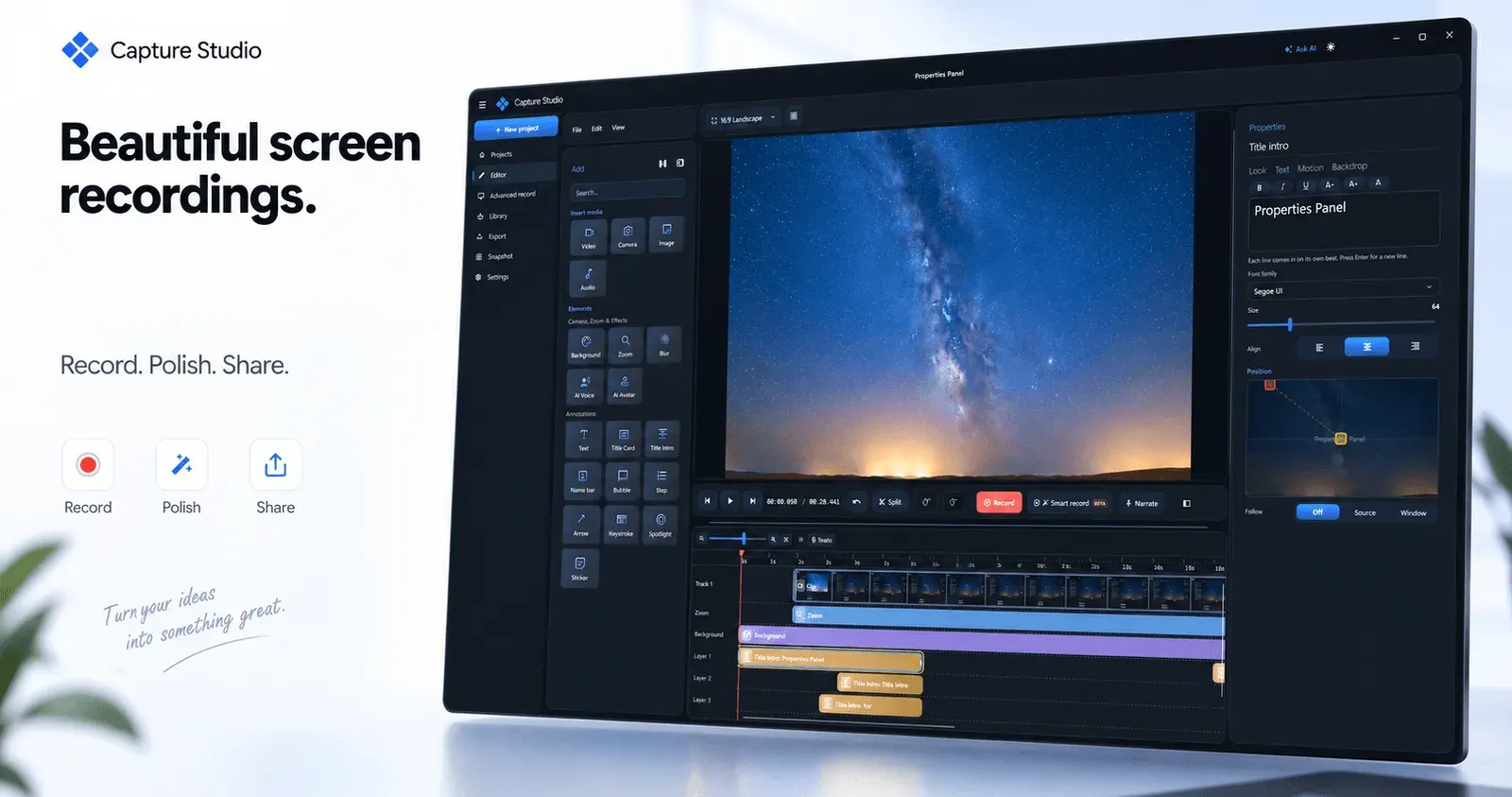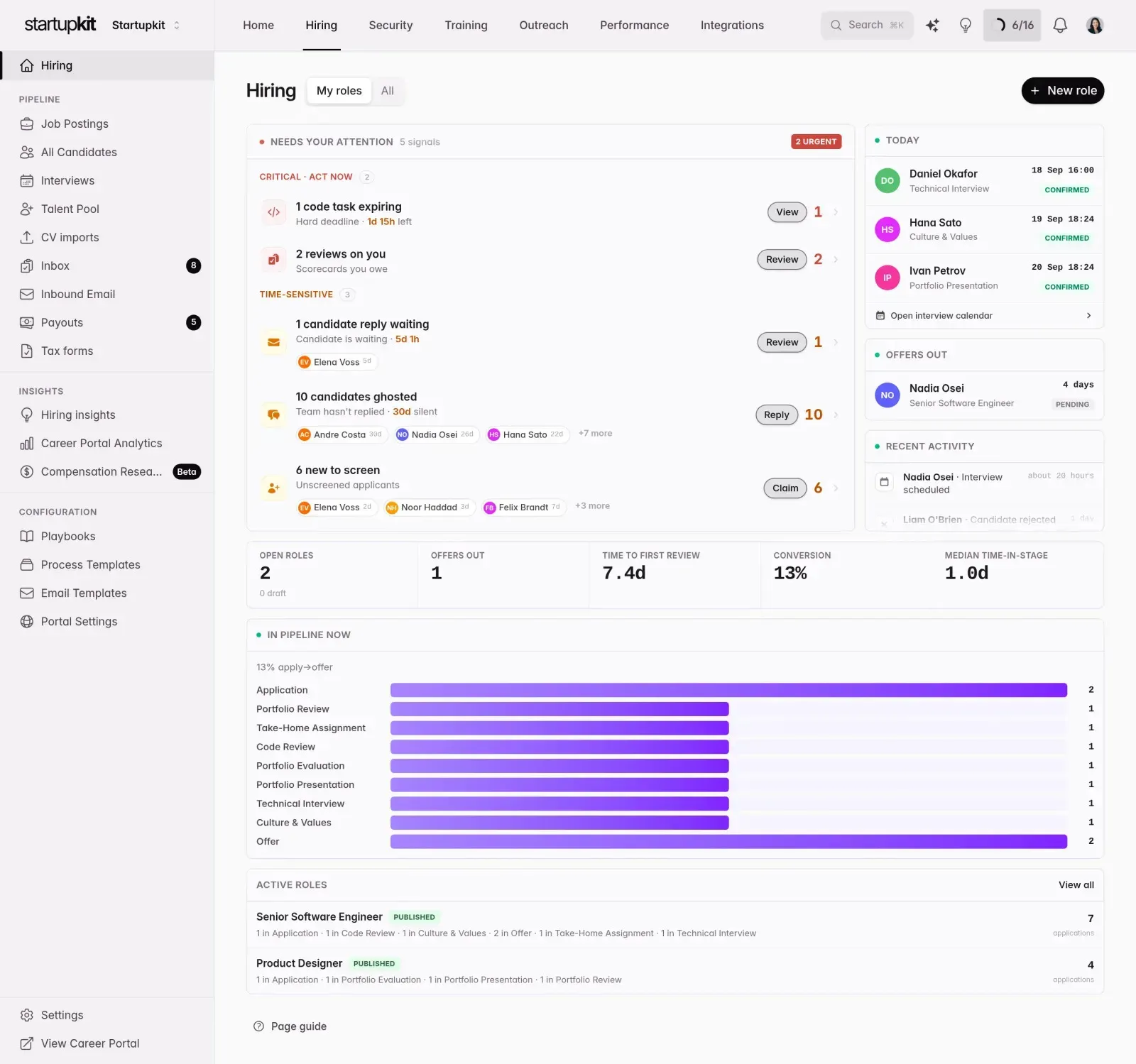
Capture Studio is a Windows screen recorder and video editor that adds auto zoom, AI voice-over, subtitles and cursor smoothing to finished clips.

A curated ranking of the best AI image generators in 2026. Compare free text-to-image tools on output quality, speed and prompt control, then start creating high-quality images right in your browser - no install needed.
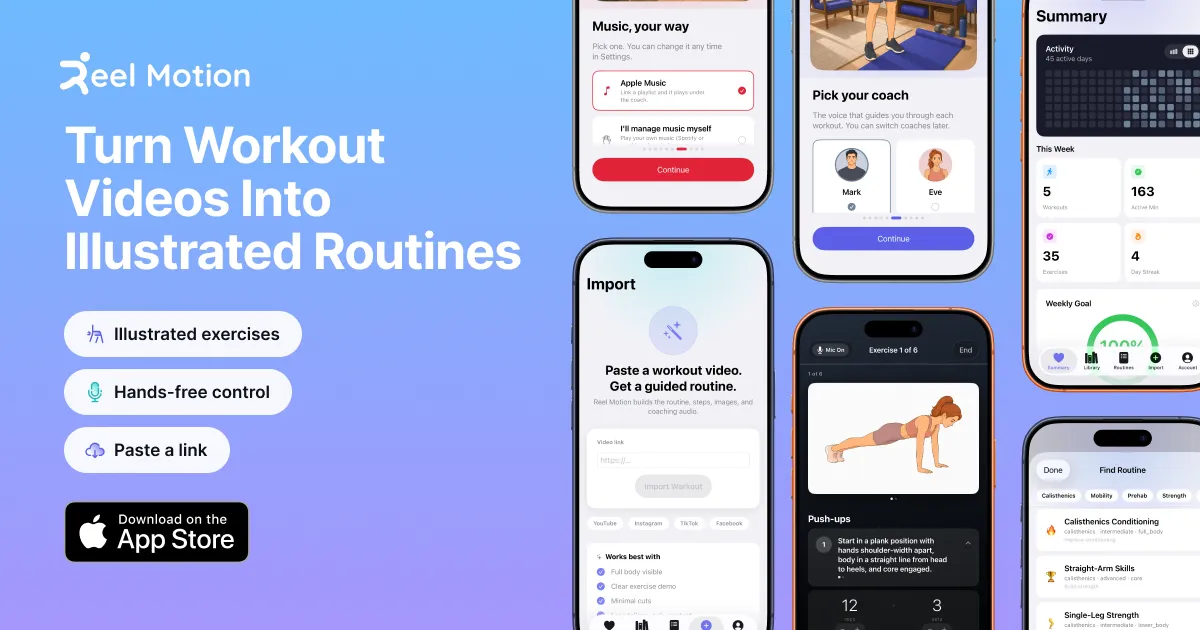

Reel Motion turns YouTube, Instagram, and TikTok workout videos into illustrated, step-by-step iOS routines with hands-free coach audio.
Submit your website to get discovered by thousands of potential customers and boost your SEO.
Get ListedCapture Studio is a Windows screen recorder and video editor that merges capture, timeline editing, and on-device artificial intelligence into one desktop application. Built by OpenHub AS, it addresses a familiar production problem: raw screen recordings look unfinished, with jittery cursor movement, no visual emphasis on important clicks, and no narration or captions. Capture Studio closes that gap by handling zoom automation, cursor smoothing, keystroke display, subtitles, and neural voice-over inside the same tool that records the footage, so a publishable clip exists the moment recording stops. The intended audience is tutorial creators, software demonstrators, product marketers, technical writers, and educators who work on Windows and want polished output without sending footage to a cloud service. Every processing step, including speech-to-text, voice cloning, and avatar lip-sync, executes locally on the user's own hardware.
Timeline Editing with Live Preview. A real multi-track timeline allows trimming, zooming, and stacking effects, and every change previews immediately before export, which removes the guesswork of render-then-check editors. Projects can also be bundled with all source media into a portable archive for moving or archiving work.
Smart Zoom That Follows the Cursor. Automatic zoom-ins track the pointer and keep attention on the active area of the screen, eliminating manual keyframe work on long tutorials. Manual keyframe zoom remains available when precise framing is required.
Smooth Cursor and Click Highlights. Cursor paths are smoothed so pointer movement looks deliberate rather than erratic, while click ripples visually mark each action. Together these refinements give tutorials a professional cadence without extra editing passes.
Keystroke Overlay. Pressed keys appear on screen in real time, which is valuable for shortcut-heavy tutorials and software walkthroughs where keyboard input drives the workflow.
On-Device Neural Voice-Over and Voice Cloning. Studio Voice supplies 85 neural voices across 22 languages, and a fifteen-second sample is enough to clone the creator's own voice for narration. All generation happens on the local GPU, with pace and expression adjustable inside the editor.
Automatic Subtitles. An on-device speech-to-text model detects the spoken language and produces styled captions, improving accessibility and making videos usable with sound off.
AI Avatars and Camera Overlays. The Studio Avatar module generates a presenter that delivers narration with real lip-sync, working with two standard female voices plus most premium female voices. The avatar set is intentionally small, and the documentation notes that the module is a compact neural model tuned for consumer-grade hardware.
Privacy Blur, Alignment Guides, and Floating Displays. Blur regions can be keyframed and set to auto-track moving windows, hiding passwords or personal data. Alignment guides reveal canvas centre and object edges, and floating display frames add rounded corners, soft shadows, and slide-in animation over a chosen background.
Snapshot Documentation Export. The Snapshot tool automatically follows each step of a recorded flow, reads the on-screen text, generates written instructions, and exports the result to Markdown, PDF, HTML, or PowerPoint Show.
Capture Modes up to 120 FPS. Recording is available for a full screen, a single window, or a drawn region, at frame rates up to 120 FPS depending on hardware capability and disk write speed. Android phones can be mirrored and recorded through Developer Mode, placing mobile footage alongside desktop footage on the timeline.
Getting started requires a Windows 10 64-bit machine at minimum, while Windows 11, eight CPU cores, 16 GB of RAM, an NVIDIA RTX 2060, and a 10 GB NVMe SSD form the recommended configuration for the AI modules. After purchase, the licence key is delivered once payment clears, and add-ons attach to the same key so they activate the next time the application checks in. The primary workflow opens with a capture source selection, either the entire display, a specific window, or a region drawn directly on screen. Recording then proceeds while keystroke data, cursor smoothing, and click ripples are collected in the background.
Once recording stops, the footage lands on the multi-track timeline, where trimming, titles, stickers, arrows, spotlights, backgrounds, and floating display frames are applied against a live preview. Smart zoom suggestions appear automatically and can be adjusted or replaced with manual keyframes. Narration is either recorded live, generated through Studio Voice, or produced by the Studio Avatar presenter. Captions are generated from the audio track, privacy blur regions are keyframed over anything sensitive, and export finalises the video. The Snapshot path runs in parallel, producing written documentation instead of a video file.
A solo founder preparing a launch demo for a B2B SaaS product records the walkthrough once, lets smart zoom and click highlights carry the viewer's attention, then uses Studio Voice to narrate in one of 22 languages without booking studio time.
A customer support lead building a help centre runs a Snapshot session over a support workflow and exports the captured steps as Markdown for the knowledge base, with the same flow available as a PDF for enterprise customers who prefer downloads.
An online course instructor records lessons at 120 FPS for a smooth playback feel, adds automatic subtitles for accessibility, and clones a voice from a short sample so every lesson shares a consistent narration tone.
A product marketer producing feature announcements mirrors an Android handset alongside the desktop, places the phone capture in a floating display frame over a gradient background, and applies keyframed blur to mask customer names in an admin panel.
A freelance technical writer delivering onboarding documentation for a client records a region capture, trims it on the timeline, and bundles the project with all media for handover, allowing the client to reopen and adjust the source later.
Capture Studio suits individual creators, small product teams, and documentation specialists who produce screen-based video on Windows and prefer not to depend on an internet connection or an ongoing subscription. It stays approachable for non-editors because zoom, cursor treatment, and captions are automated, yet the multi-track timeline gives experienced editors room to refine. The narration and avatar modules target teams that need voice-over without hiring talent. Compared with Camtasia, which is a mature cross-platform editor with a broader template library, Capture Studio leans on local neural processing and a one-time licence. Compared with OBS Studio, which offers free and highly configurable capture but almost no editing pipeline, Capture Studio bundles the entire post-production stage. Compared with cloud-first tools such as Loom, it keeps footage on the local machine, which matters to teams handling sensitive screens.