indieshipped is a weekly launchpad and directory where indie hackers ship new startup projects every Monday for discovery, upvotes, and organic growth.
Submit your website to get discovered by thousands of potential customers and boost your SEO.
Get Listedindieshipped is a curated launchpad and product discovery directory created for indie hackers, solo founders, and small product teams that build and ship software on the internet. The platform solves a familiar problem for bootstrapped makers: the moment a product is finished, there is no reliable place to put it in front of an audience that actually cares. Rather than a firehose of daily noise, indieshipped runs a deliberate weekly cycle in which new projects drop every Monday, giving each launch a concentrated window of attention. The site pairs that cadence with permanent, individually indexed project pages that are explicitly designed to rank in search engines, so a launch keeps generating traffic long after the Monday drop has passed. It is aimed at people who treat shipping as a habit rather than a one time event, from weekend builders to operators running small portfolios of niche tools.
The Monday Drop Cadence. The defining mechanic of indieshipped is its once per week release schedule. A live countdown on the homepage tracks days, hours, minutes, and seconds until the next batch of products goes live, which turns the launch calendar into an appointment. Instead of competing against an endless stream of submissions posted at random hours, makers compete inside a single, well defined weekly cohort, and visitors know exactly when to return for something new.
Search Optimized Project Pages. Every submission receives a dedicated route on the domain, such as /projects/capture-studio or /projects/reel-motion, complete with its own headline, logo, long description, category labels, and an outbound link to the product site. These pages are the commercial heart of the service. The marketing copy on the homepage states plainly that each startup is given a page built to rank, which means the value proposition extends well beyond the launch spike and into long tail organic search.
Upvoting and Ranking Signals. Listings carry an upvote control with a visible tally, and the interface labels certain entries as boosted. Rankings feed the discovery surfaces that a visitor sees first, including the numbered Shipping This Week list. The vote count starts from zero for fresh entries, so early traction is easy to read and the ordering of the list is transparent to anyone browsing.
The Spotlight Placement. Above the weekly queue sits an In The Spotlight section that highlights featured products with a Top Pick badge, a square logo, a product name, and a short pitch paragraph. The same zone includes an Open Slot card that invites a maker to claim the position, which doubles as both a merchandising unit and a paid advertising inventory block.
Category Directory and Browsing Paths. A dedicated browse section organizes the catalog into named verticals with counts beside each label, so a visitor can move straight into Productivity, Content, HR, Education, Mobile Apps, or Health. A full category directory, an alternatives index, and maker profiles expand the taxonomy further, giving the site dozens of internal entry points rather than a single chronological feed.
Editorial Surfaces and Leaderboards. Beyond the current week, indieshipped maintains separate sections for Last Week's Best and Best Of The Month, alongside winners filtered by week or month, a trending page, and a hall of fame. These surfaces give older launches a second and third chance at exposure and reward consistent participation by makers.
The Monday Newsletter. A sidebar block invites readers to get the Monday drop, described as one email per week containing the best new startups and nothing else. The signup form sits alongside a running founder count, which signals community size directly and gives subscribers a lightweight, low commitment reason to hand over an email address.
Paid Placement and Advertising Inventory. A pricing page governs several commercial products: front page spotlight slots, site wide partner placements limited to three positions, and a general advertise here call to action. Affiliate programs and reviews are also listed in the footer as part of the commercial offering.
The journey begins on the homepage, where a visitor sees the countdown, the highlighted spotlight products, and the current week's ranked list in a single scroll. From there, browsing is unfiltered or directed through category links, the trending page, or the random surprise me option. A reader who wants to participate creates an account through the sign up route, then submits a project via the ship a project form. A submission requires a product name, a logo image, a description, and one or more category labels, and the resulting listing is published on the next drop.
Once live, the listing behaves like a small landing page. It carries the outbound visit website link with a referral parameter appended, an upvote button, and category chips that route back into the taxonomy. Makers can point their own audiences at the page and ask for votes, while the site's own newsletter and leaderboards push traffic toward whatever is performing. Daily use for a returning visitor is simply checking the week's list, upvoting anything worth a look, and clicking through to the product sites. Setup requirements are minimal, since the entire experience runs in the browser with no installation, no desktop client, and no plugin. The design decisions favor clarity: square logos for fast scanning, short pitches for quick evaluation, visible vote counts for social proof, and a persistent search field with a keyboard shortcut for power users.
A solo founder launching a B2B SaaS tool who has just finished a minimum viable product can submit the project, receive a permanent indexed page, and use the Monday spotlight as a first distribution event rather than cold outreach to strangers on social platforms. The project page keeps working as a backlink and an evergreen landing destination months after launch day.
A mobile app developer building a fitness or habit product, similar to the Reel Motion listing that converts workout videos into illustrated step by step routines, benefits from the Mobile Apps and Health categories, because those labels put the app in front of readers who are already browsing that vertical instead of a general tech audience.
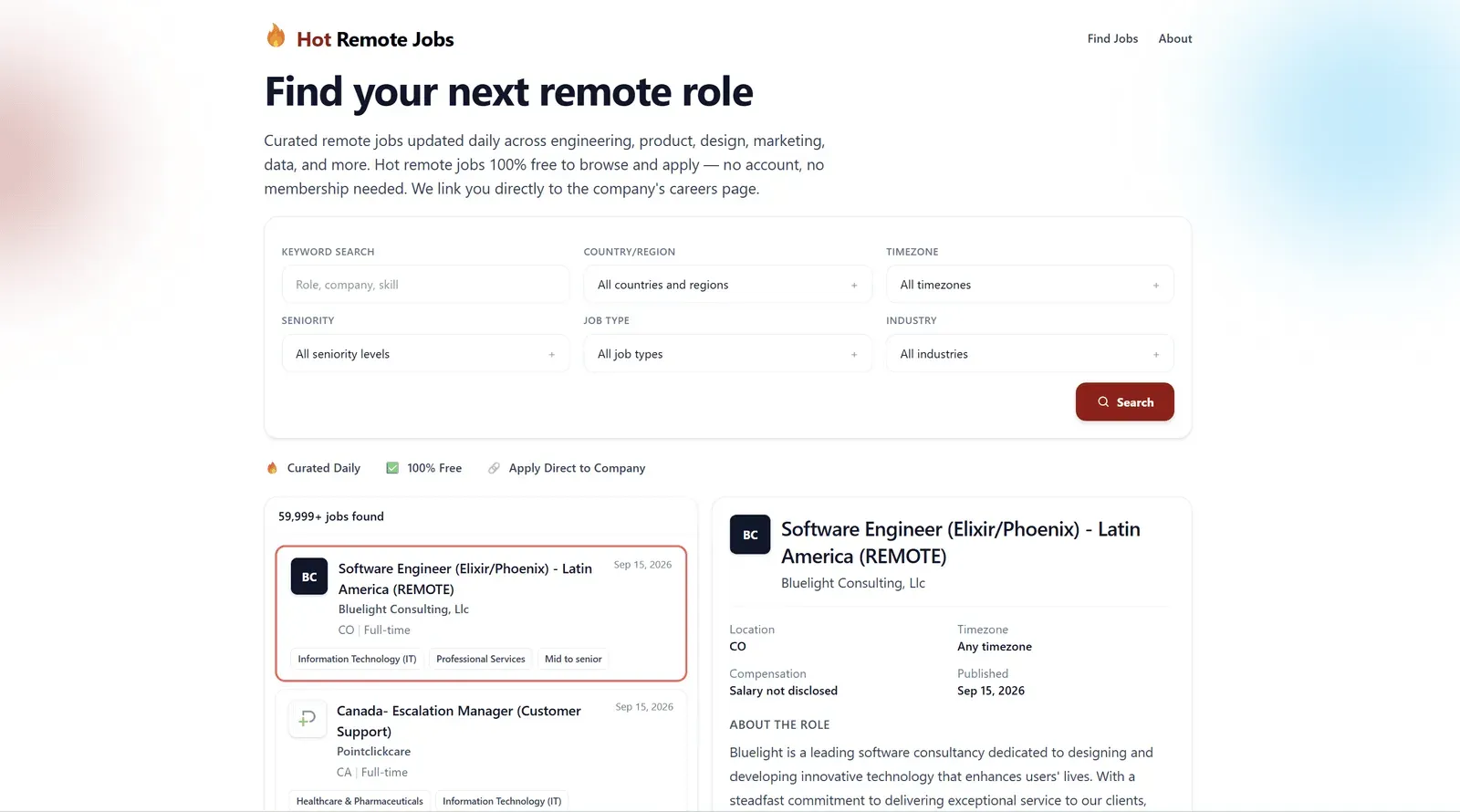
An operator of a niche content or job site, such as a home maintenance answer resource or a remote jobs board carrying tens of thousands of listings, uses indieshipped less for a viral moment and more for a durable citation. The project page links out directly to the destination site, which supports both referral traffic and search authority.
A maker with a portfolio of small products can stagger submissions across several Mondays, using the winners archive, the monthly leaderboard, and the hall of fame as a way to accumulate repeated exposure rather than spending a single launch and disappearing.
A team with a budget that wants predictable placement can buy the front page spotlight slot or one of the three site wide partner positions, which puts the product in front of every visitor on every page without waiting for a vote driven ranking.
indieshipped is built for independent makers, bootstrapped founders, and small product teams, typically one to ten people, who are comfortable shipping software without a marketing department behind them. The technical bar is low: submitting a project requires a logo, a description, and category choices, not a developer account or an API key. It suits designers, developers, no code builders, writers, and newsletter operators alike. Compared with broad launch communities such as Product Hunt, Hacker News, and BetaList, indieshipped differentiates through its fixed weekly rhythm and its emphasis on owned, search ranked project pages rather than a single high traffic day.