Best Stripe Alternatives for SaaS in 2026
Four Merchant-of-Record platforms that handle global tax so you do not have to.


Key takeaways
- 1. PaddleEnterprise ready
Established and scaling SaaS teams that want a mature, all-in-one billing and tax platform.
Visit Paddle - 2. Lemon SqueezyNow owned by Stripe
Indie makers and small teams selling digital products who want a fast, simple setup.
- 3. PolarOpen source
Developers and open-source maintainers who want a transparent, developer-first MoR.
- 4. CreemLowest headline fee
Cost-conscious SaaS founders who want Merchant-of-Record coverage at a lower fee.
Overview
Stripe is a powerful payment processor, but it leaves sales tax, VAT, and compliance to you. For SaaS founders selling worldwide, that means registering in dozens of jurisdictions, filing returns, and remitting tax across borders. A Merchant of Record (MoR) removes that burden by becoming the legal seller of record and handling all of it on your behalf.
The four platforms below all operate as Merchant of Record, so they calculate, collect, and remit VAT and sales tax for you. This guide compares their pricing model, fees, tax handling, and ideal use case to help you choose. All figures are approximate, so verify current rates on each provider's pricing page before committing.
How to choose
Before you pick, weigh these against your own situation — the right choice depends on your stage, budget, and goals.
Total fee structure — Compare per-transaction rates, currency conversion, and payout fees, not just the headline percentage, to see real cost at your volume.
Payment method coverage — Check support for the cards, wallets, and local methods your customers actually use in the regions you sell to.
Payout speed and terms — Verify how fast funds settle and whether there are rolling reserves or holds that could strain your cash flow.
Developer experience — Weigh API quality, documentation, and SDKs, since a smooth integration saves far more than a marginal fee difference.
Compliance and tax handling — Prefer processors that handle PCI, SCA, and sales-tax/VAT calculation so you offload regulatory burden as you grow.
Comparison at a glance
| Tool | Model | Fees | Tax handled | Best for |
|---|---|---|---|---|
| Merchant of Record | ~5% + 50c (verify) | Yes | Scaling SaaS teams | |
| Merchant of Record | ~5% + 50c (verify) | Yes | Indie makers and digital products | |
| Merchant of Record | Tiered, from ~5% + 50c (verify) | Yes | Developers and open-source projects | |
| Merchant of Record | ~3.9% + 40c (verify) | Yes | Cost-conscious SaaS founders |
Pricing and features change often. Verify current details on each provider's site. Last checked August 2026.
Feature comparison
| Feature | ||||
|---|---|---|---|---|
| Merchant of Record | ||||
| Handles VAT & sales tax | ||||
| Subscriptions & billing | ||||
| License keys / downloads | Partial | Partial | ||
| Open source | ||||
| Lowest fees | Partial |
"Partial" means available via add-on, in beta, or more limited than competitors.
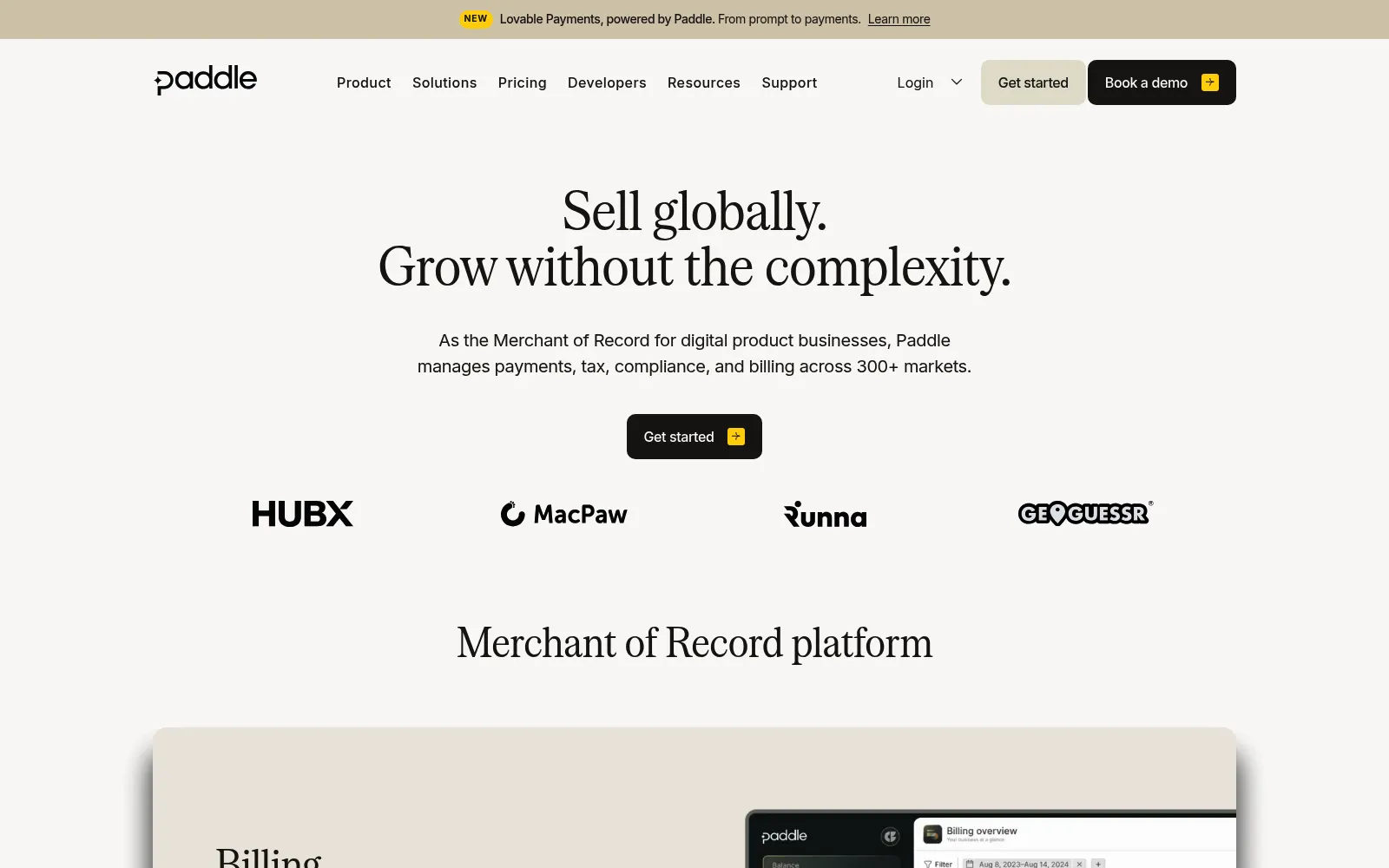
Paddle is one of the most established Merchant-of-Record platforms and is built specifically for software and SaaS businesses. It acts as the reseller of your product, which means it takes on liability for global sales tax and VAT, handles fraud, and manages chargebacks. Pricing is a single blended fee of roughly 5% plus 50c per transaction, though you should verify current rates as they vary by volume and product type.
Beyond payments, Paddle bundles subscription management, invoicing, and revenue reporting into one platform. It is a strong fit for teams that want a mature, compliance-heavy solution and are willing to trade a higher per-transaction fee for fully outsourced tax and billing operations.
Best for: Established and scaling SaaS teams that want a mature, all-in-one billing and tax platform.
Pros
- Full Merchant of Record covering global VAT and sales tax
- Mature subscription and invoicing tooling built for SaaS
- Handles chargebacks, fraud, and compliance for you
- Detailed revenue and subscription analytics
Cons
- Higher blended fee than raw payment processors
- Less flexible than Stripe for custom payment flows
- Approval and onboarding can be strict for new sellers
- Fees may vary by product type, so verify rates

Lemon Squeezy is a Merchant-of-Record platform popular with indie makers and small SaaS teams for its simple setup and clean interface. It handles VAT, sales tax, and compliance as the seller of record, and supports subscriptions, digital downloads, and license keys. Fees are roughly 5% plus 50c per transaction, so verify current pricing before you commit.
Lemon Squeezy is now owned by Stripe, which may influence its roadmap and integration options over time. It remains a fast way to start selling globally without setting up tax infrastructure, and it is especially well suited to solo founders and small teams selling digital products.
Best for: Indie makers and small teams selling digital products who want a fast, simple setup.
Pros
- Merchant of Record handling VAT and sales tax
- Very fast setup with a clean, friendly interface
- Built-in support for license keys and digital downloads
- Backed by Stripe after acquisition
Cons
- Roadmap uncertainty following the Stripe acquisition
- Fewer enterprise features than Paddle
- Fee of roughly 5% plus 50c, so verify current rates
- Less suited to complex or high-volume billing
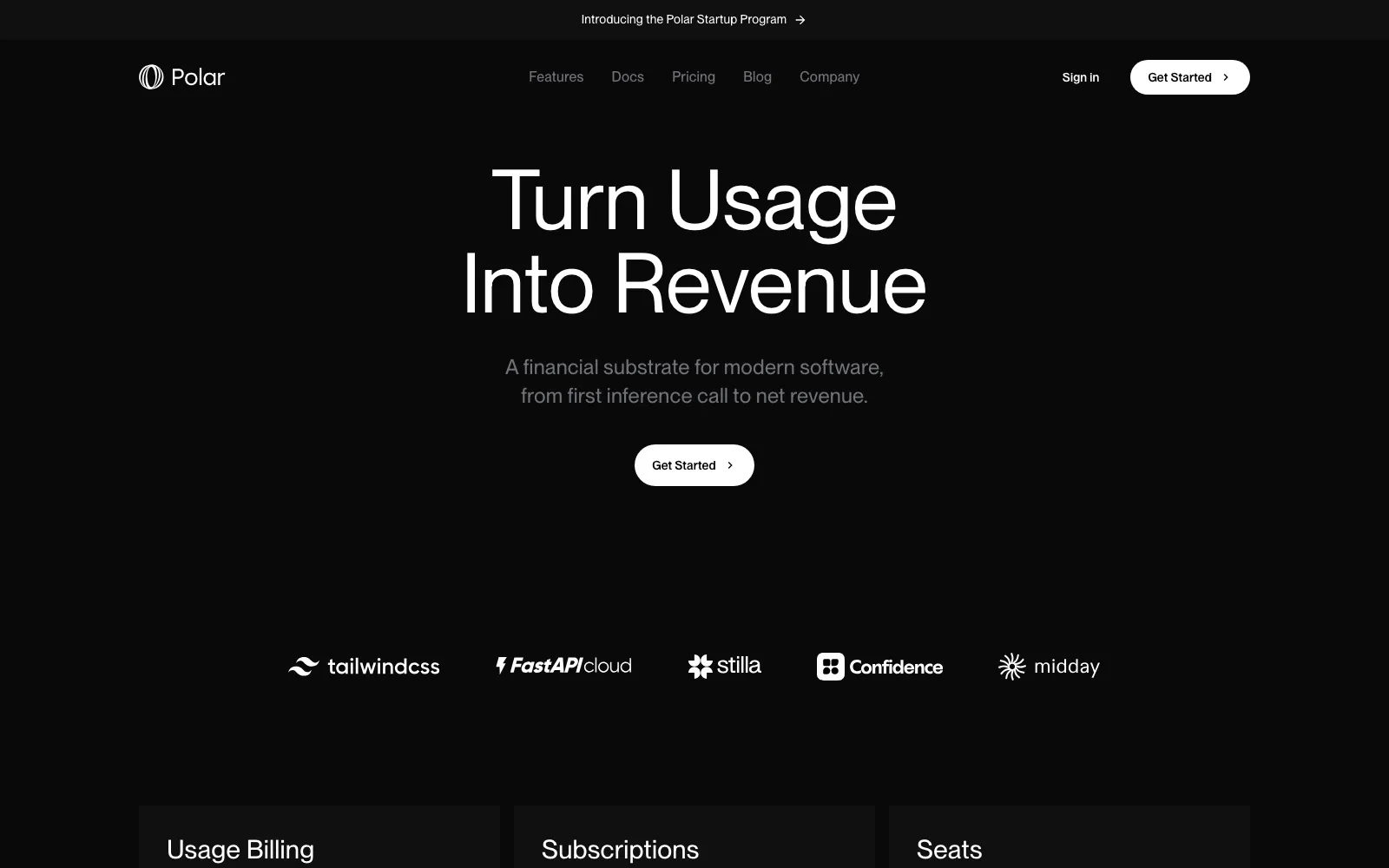
Polar is an open-source Merchant-of-Record platform aimed at developers and open-source maintainers. It acts as the seller of record and handles VAT and sales tax for you, with a tiered pricing model. The Starter tier is around 5% plus 50c per transaction, with lower rates available on paid plans, so verify the current tiers on its pricing page.
Because Polar is open source, it appeals to teams that value transparency and a developer-first approach, including usage-based billing and tight integrations with modern tooling. It is a good fit for developers monetizing software, APIs, or open-source work who want an MoR without the overhead of larger platforms.
Best for: Developers and open-source maintainers who want a transparent, developer-first MoR.
Pros
- Merchant of Record covering VAT and sales tax
- Open source with a transparent, developer-first approach
- Tiered pricing that lowers fees on paid plans
- Strong support for usage-based and modern billing
Cons
- Younger platform than Paddle or Lemon Squeezy
- Fewer non-technical, no-code features
- Pricing tiers require checking to confirm your rate
- Smaller ecosystem and integration library
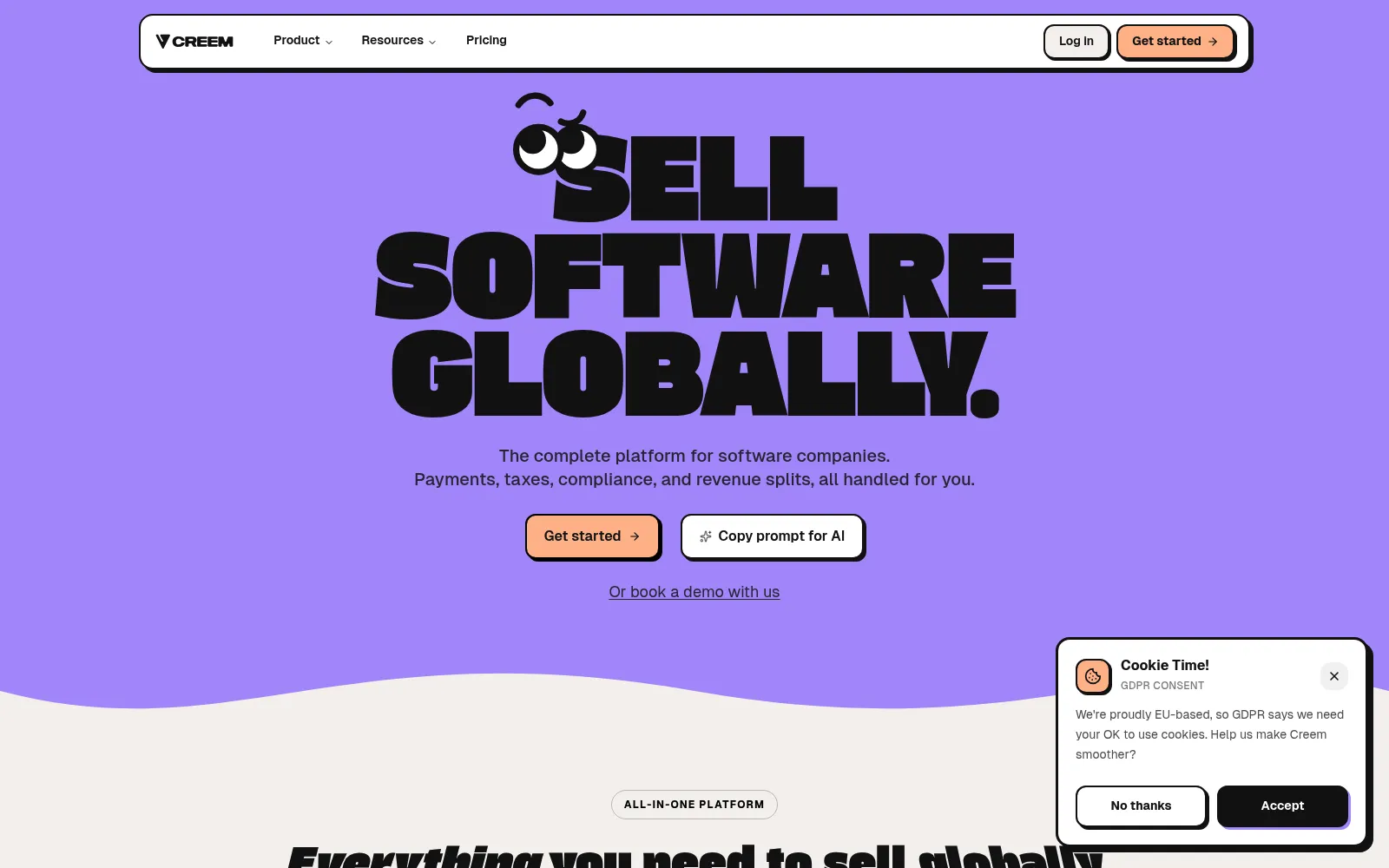
Creem is a newer Merchant-of-Record platform that competes largely on price, with a headline fee of roughly 3.9% plus 40c per transaction, lower than most rivals, so verify the current rate. Like the others, it becomes the seller of record and handles VAT and sales tax compliance on your behalf.
Creem targets SaaS founders who want MoR benefits at a lower cost, with support for subscriptions and digital products. As a younger entrant it has a smaller track record, so weigh the fee savings against the maturity and ecosystem of more established platforms.
Best for: Cost-conscious SaaS founders who want Merchant-of-Record coverage at a lower fee.
Pros
- Lowest headline fee at roughly 3.9% plus 40c (verify)
- Merchant of Record handling VAT and sales tax
- Supports subscriptions and digital products
- Simple, founder-friendly onboarding
Cons
- Newer platform with a shorter track record
- Smaller ecosystem and fewer integrations
- Fewer enterprise and advanced billing features
- Fees and terms should be verified before committing
Frequently asked questions
What is a Merchant of Record and why does it matter for SaaS?+
A Merchant of Record (MoR) is the legal entity that sells your product to the customer. Because the MoR is the seller, it takes on responsibility for calculating, collecting, and remitting VAT and sales tax, plus handling compliance, chargebacks, and fraud. For SaaS selling globally, this removes the need to register for tax in many jurisdictions yourself.
How are these different from Stripe?+
Stripe is a payment processor, so it moves money but leaves tax registration, collection, and remittance to you. Paddle, Lemon Squeezy, Polar, and Creem are Merchant-of-Record platforms, meaning they act as the seller and handle global tax and compliance on your behalf. That convenience typically comes with a higher blended fee than raw Stripe processing.
Which option has the lowest fees?+
Creem has the lowest headline fee at roughly 3.9% plus 40c per transaction, compared with around 5% plus 50c for Paddle and Lemon Squeezy, and a tiered model for Polar that can drop below 5% on paid plans. All figures are approximate, so verify current rates on each provider's pricing page before deciding.
Do all of these handle VAT and sales tax automatically?+
Yes. Because Paddle, Lemon Squeezy, Polar, and Creem all operate as Merchant of Record, each one calculates, collects, and remits VAT and sales tax for you as part of its fee. This is the core reason SaaS founders choose an MoR over a standard payment processor.
The verdict
For most SaaS teams, Paddle is the safest all-in-one choice thanks to its maturity and deep billing tooling, while Lemon Squeezy suits indie makers wanting a fast start. Polar is the strongest pick for developers and open-source projects that value transparency, and Creem is worth a look for cost-conscious founders willing to trust a newer platform for its lower fee. Because all four handle VAT and sales tax as Merchant of Record, the decision comes down to fees, maturity, and fit. Verify current pricing before you commit.
Related guides

Alternative.tools review team
Editorial team
We are the editorial team behind Alternative.tools, an independent platform that helps you find the best tools and their alternatives. We use AI to research and summarize newly launched websites, tools, and products, focusing on what each one does, who it's for, and which popular tools it can replace, so you can pick the right alternative faster, without the marketing spin.